Molasses Brown Soda Bread
Brown Soda Bread was already on my mind when I stepped into the small neighborhood library on a rainy Saturday morning, where a local history group had gathered for a heritage cooking talk.
One woman shared stories of baking bread before dawn for her children, while another passed around a worn notebook filled with handwritten recipes. Later that afternoon, I met a friend at the farmers market
Where the air smelled faintly of damp grain and fresh dairy. A baker there talked about how soda bread was once shaped quickly and baked hot, no waiting, no yeast, just instinct and practice.
Back home, the kitchen felt quiet and grounding. The kettle clicked off, the windows fogged slightly, and flour dusted the counter like a soft snowfall. Brown Soda Bread felt right for that moment. Mixing it brought a sense of rhythm rather than precision, the kind of baking that invites intuition.
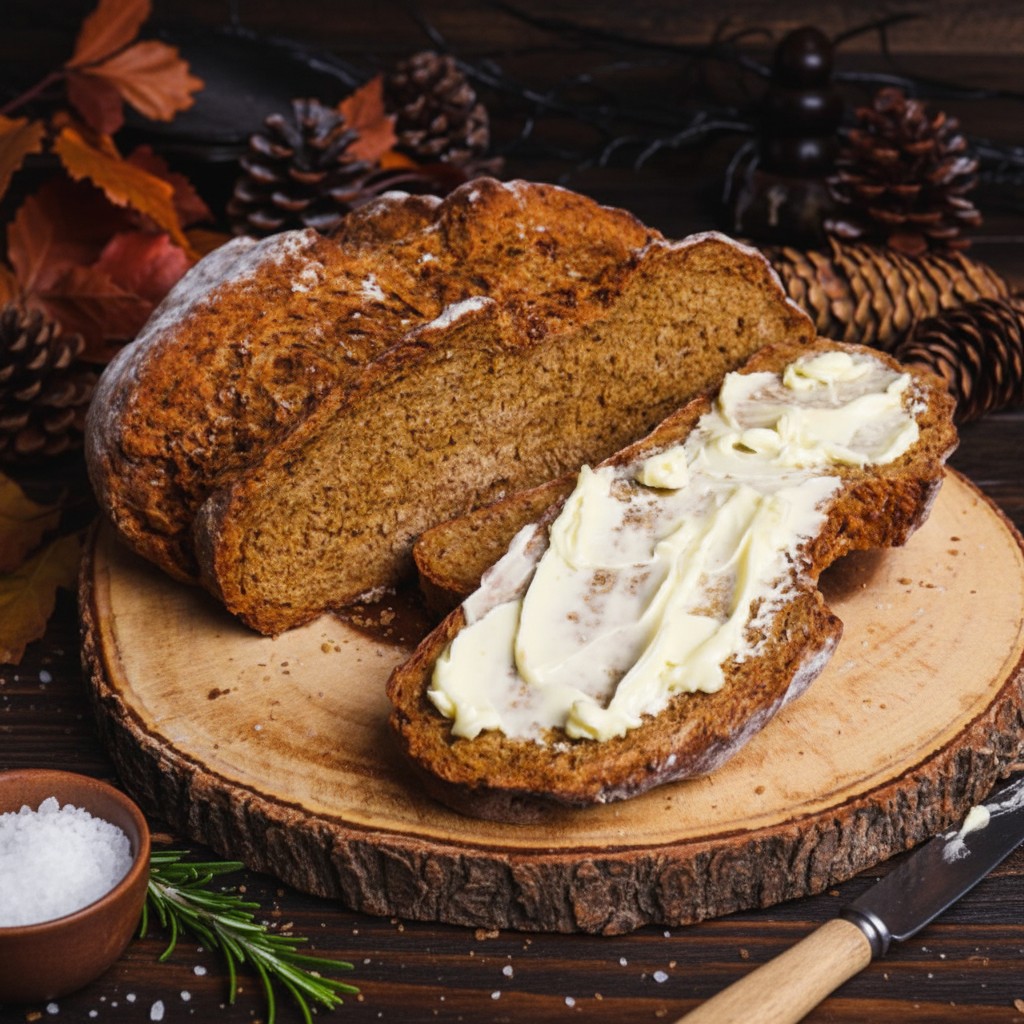
As it baked, the smell of toasted wheat and molasses filled the house, deep and earthy. When the loaf came out, cracked open across the top, it looked honest and familiar, like something meant to be shared at a crowded table or eaten warm with butter while standing at the counter.
Short Description
This Brown Soda Bread is a rustic, hearty loaf made with whole wheat flour, wheat germ, and molasses, baked quickly without yeast. It has a crisp crust, tender crumb, and deep grain flavor that pairs beautifully with both sweet and savory toppings.
Key Ingredients
- 2 ½ cups all-purpose flour (300 g)
- 1 ¾ cups whole wheat flour (210 g)
- ¼ cup wheat germ (20 g)
- 1 ½ tsp baking soda (9 g)
- 1 tsp salt (6 g)
- 1 ½ cups buttermilk (375 ml)
- 3 tbsp molasses (45 ml)
- 2 tbsp melted butter (28 g)
Tools Needed
- Large mixing bowl
- Medium mixing bowl
- Whisk
- Wooden spoon or dough scraper
- Baking sheet
- Parchment paper or flour
- Sharp knife
- Clean tea towel
Cooking Instructions
Step 1: Preheat the Oven
Set the oven to 425°F. This initial high heat helps the bread rise quickly and form a sturdy crust before lowering the temperature.
Step 2: Mix the Dry Ingredients
In a large bowl, combine all-purpose flour, whole wheat flour, wheat germ, baking soda, and salt. Stir well so the baking soda is evenly distributed, which prevents uneven rising.
Step 3: Combine the Wet Ingredients
In a separate bowl, whisk together buttermilk, molasses, and melted butter until fully blended. The mixture should look smooth and slightly glossy.
Step 4: Form the Dough
Pour the wet mixture into the dry ingredients. Stir gently until a soft, shaggy dough forms. If the dough feels overly sticky, add 1 tablespoon of flour at a time. If it feels dry, splash in a bit more buttermilk.
Step 5: Shape the Loaf
Turn the dough out onto a lightly floured surface. Gently shape it into a round loaf using minimal handling. Too much kneading will make the bread dense.
Step 6: Prepare for Baking
Place the loaf on a floured or parchment-lined baking sheet. Lightly dust the top with flour. Use a sharp knife to score a cross about ½ inch deep to help the bread expand evenly.
Step 7: Bake in Two Stages
Bake at 425°F for 15 minutes. Reduce the oven temperature to 375°F and continue baking for 30 to 35 minutes, until the loaf is deeply browned and sounds hollow when tapped on the bottom.
Step 8: Cool and Soften
Remove from the oven and immediately wrap the bread in a clean tea towel. Let it cool for at least 20 minutes. This softens the crust while keeping the interior tender.
Why You’ll Love This Recipe
No yeast or long rising time
Deep, nutty flavor from whole grains
Naturally hearty and filling
Perfect for beginners and experienced bakers
Versatile for sweet or savory toppings
Mistakes to Avoid & Solutions
Overmixing the dough
This can make the bread tough and heavy.
Solution: Stir just until combined and stop once the dough comes together.
Uneven rising
Often caused by poorly mixed baking soda.
Solution: Whisk dry ingredients thoroughly before adding liquids.
Dry crumb
Usually from too much flour.
Solution: Add flour slowly and stop as soon as the dough holds together.
Burnt crust
High heat left on too long.
Solution: Follow the two-temperature baking method carefully.
Flat loaf
Too much handling during shaping.
Solution: Shape quickly and gently without pressing the dough down.
Serving and Pairing Suggestions
Slice thick and serve with salted butter
Pair with soups and stews
Toast and spread with honey or jam
Serve alongside sharp cheddar and apples
Use for open-faced sandwiches
Storage and Reheating Tips
Room Temperature: Wrap tightly and store for up to 2 days
Refrigeration: Not recommended, as it dries the bread
Freezing: Slice and freeze for up to 2 months
Reheating: Toast slices or warm briefly in a low oven
FAQs
1. Can I substitute regular milk for buttermilk?
Yes. Mix 1 tablespoon lemon juice or vinegar with milk and let it sit for 5 minutes.
2. Why is my soda bread crumbly?
It may have too much flour or not enough liquid. Measure carefully and adjust slowly.
3. Can I make this without molasses?
You can substitute honey or maple syrup, but the flavor will be lighter.
4. How do I know when it’s fully baked?
Tap the bottom of the loaf. It should sound hollow and feel firm.
5. Can I add seeds or oats?
Yes. Add up to ½ cup of seeds or rolled oats to the dry ingredients.
Tips & Tricks
Measure flour by spooning into the cup and leveling
Use cold buttermilk for better structure
Score deeply to prevent cracking in random spots
Let the bread cool slightly before slicing
Use a serrated knife for clean cuts
Recipe Variations
Seeded Brown Soda Bread: Add ¼ cup sunflower seeds and ¼ cup pumpkin seeds to the dry mix for extra crunch.
Oat-Topped Version: Brush the top with buttermilk and sprinkle rolled oats before baking for texture.
Slightly Sweeter Loaf: Increase molasses to 4 tablespoons for a deeper sweetness.
Dairy-Free Option: Replace buttermilk with plant milk mixed with lemon juice and use oil instead of butter.
Extra Whole Grain: Swap ½ cup of all-purpose flour for additional whole wheat flour and add 2 tablespoons extra buttermilk.
Final Thoughts
Baking Brown Soda Bread brings a certain calm into the kitchen, the kind that doesn’t rely on timers or complicated steps. It fits into quiet mornings, shared meals, and those in-between hours when slowing down feels necessary. The loaf comes together quickly, but the experience lingers long after the bread is sliced and served.
Each time I make it, the process feels grounding rather than rushed. Flour on the counter, warmth from the oven, and the simple satisfaction of cutting into a well-baked loaf all add up to something meaningful. Brown Soda Bread carries history, practicality, and warmth in every bite, and it never asks for more than a little care and attention.
Molasses Brown Soda Bread
Course: Main CourseDifficulty: Easy10
servings15
minutes50
minutesThis Brown Soda Bread is a rustic, hearty loaf made with whole wheat flour, wheat germ, and molasses, baked quickly without yeast. It has a crisp crust, tender crumb, and deep grain flavor that pairs beautifully with both sweet and savory toppings.
Ingredients
2 ½ cups all-purpose flour (300 g)
1 ¾ cups whole wheat flour (210 g)
¼ cup wheat germ (20 g)
1 ½ tsp baking soda (9 g)
1 tsp salt (6 g)
1 ½ cups buttermilk (375 ml)
3 tbsp molasses (45 ml)
2 tbsp melted butter (28 g)
Directions
- Preheat oven to 425°F to create a strong initial rise and crust.
- Mix all-purpose flour, whole wheat flour, wheat germ, baking soda, and salt in a large bowl.
- In another bowl, whisk buttermilk, molasses, and melted butter until smooth.
- Pour wet into dry and stir gently into a soft, shaggy dough. Adjust flour or buttermilk as needed.
- Turn dough onto a floured surface and gently shape into a round loaf with minimal kneading.
- Place loaf on floured or lined baking sheet, dust top with flour, and score a ½ inch deep cross.
- Bake at 425°F for 15 minutes, then reduce to 375°F and bake 30–35 minutes until hollow-sounding.
- Wrap in a tea towel and cool for at least 20 minutes to soften crust and settle the texture.