Savory Halibut With Buerre Blanc
Maya’s engagement dinner was set for a breezy Saturday in early May, hosted under a canopy of wisteria in her mother’s backyard. The guest list was tight just family and a few of our childhood friends.
She wanted something elegant yet not overdone, something that whispered sophistication without screaming for attention. That morning, as we ran around finalizing the table settings and arranging clusters of white ranunculus, I cooked in her mother’s sunlit kitchen, barefoot, with a linen apron dusted in flour and lemon zest.
We wanted the menu to reflect both comfort and refinement. So in the middle of slicing strawberries for a basil-champagne compote, the idea of halibut with beurre blanc struck like a breeze off the coast clean, vibrant, and rich without being heavy. I remembered the halibut cheeks I had picked up the day before from Mr. Cohen’s fish stall at the marina.
He always sets aside the best for me delicate, snow-white fillets with a natural sweetness. We served it with asparagus and herbed farro, and somewhere between the clinking of glasses and the soft jazz humming from the Bluetooth speaker, someone leaned over and whispered, “This tastes like a quiet celebration.”
Making this Halibut With Beurre Blanc again last week, I wasn’t in a garden or surrounded by twinkling lights. It was just me, a quiet evening, and a glass of wine, cooking it again for the joy of it and honestly, the sauce alone is reason enough.
Short Description
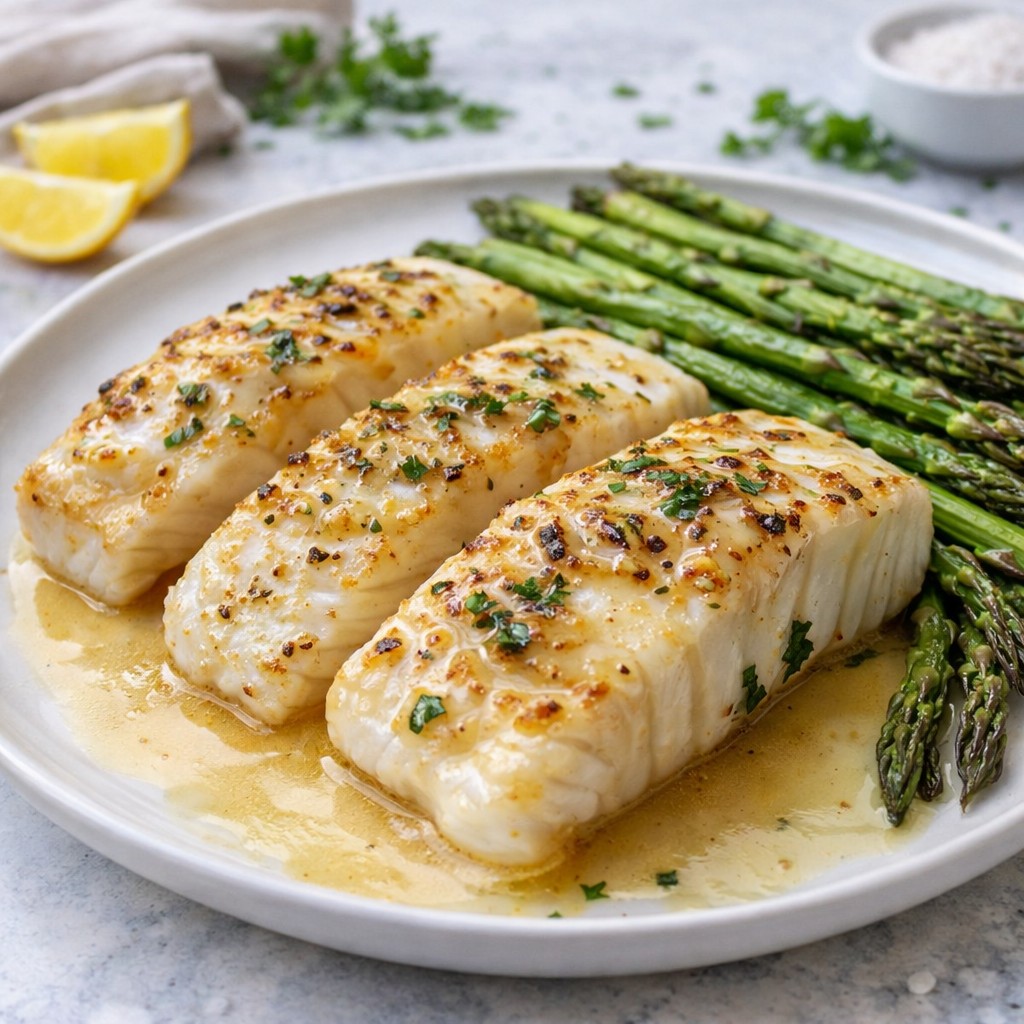
Halibut With Beurre Blanc features tender halibut cheeks pan-seared until just golden, finished with a silky beurre blanc made from shallots, white wine, lemon, and fresh dill.
Key Ingredients
For the Beurre Blanc Sauce
- 8 tablespoons cold unsalted butter, cut into cubes
- 1 tablespoon minced shallots
- 2 tablespoons lemon juice
- 2 tablespoons dry white wine
- 1 teaspoon finely chopped fresh dill
- Salt, to taste
- White pepper, to taste
For the Halibut
- 4 to 8 halibut cheeks
- 1 teaspoon grapeseed oil
- 1 teaspoon unsalted butter
- ¼ lemon
- Salt, to taste
Tools Needed
- Sharp knife
- Citrus juicer
- Saucepan
- Non-stick skillet
- Whisk
- Fish spatula
- Fine mesh strainer (optional)
Cooking Instructions
Step 1: Prepare the Sauce Base
In a small saucepan, combine minced shallots, lemon juice, and white wine. Set over medium heat and bring to a gentle simmer.
Reduce the liquid by about two-thirds, until the mixture is fragrant and slightly syrupy.
Step 2: Emulsify the Butter
Lower the heat to low. Begin whisking in the cold butter cubes one at a time, allowing each to fully melt before adding the next.
Continue whisking gently until the sauce is pale, creamy, and smooth. Season with a pinch of salt and a light dash of white pepper.
Remove from heat but keep warm.
Step 3: Cook the Halibut
Heat grapeseed oil and butter in a non-stick skillet over medium-high heat. Lightly salt the halibut cheeks and place them in the hot pan.
Sear for 1 to 2 minutes per side, just until the flesh turns opaque and flakes gently at the edges. Avoid overcooking they should remain juicy and tender.
Step 4: Finish the Sauce
Right before serving, whisk in finely chopped dill into the warm beurre blanc. This keeps the flavor vibrant and fresh.
Step 5: Plate and Serve
Arrange halibut cheeks on warmed plates. Spoon the dill beurre blanc over each portion and add a final squeeze of lemon for brightness. Serve immediately while warm.
Why You’ll Love This Recipe
Silky, melt-in-your-mouth texture from perfectly cooked halibut
Bright, elegant flavors that balance richness and acidity
Quick enough for weeknights, special enough for celebrations
Naturally gluten-free and low-carb
Pairs beautifully with simple vegetables or grains
Mistakes to Avoid & Solutions
Using warm butter for the sauce
The sauce may split if the butter isn’t cold.
Solution: Keep butter cubes in the fridge until the moment you need them, and whisk slowly over low heat.
Over-reducing the sauce base
If it evaporates too much, the flavor can turn bitter.
Solution: Stop reducing when about one-third of the liquid remains—look for a glossy, slightly thick texture.
Cooking the halibut too long
Overcooked halibut turns dry quickly.
Solution: Cook only until opaque. If unsure, test one cheek with a fork—it should flake easily without resistance.
Adding dill too early
Fresh herbs lose flavor and turn dull if heated too long.
Solution: Whisk in the dill right before serving to keep the aroma lively.
Not seasoning in layers
If you only salt at the end, flavors may fall flat.
Solution: Lightly season both the fish and the sauce at different stages for depth.
Serving and Pairing Suggestions
Serve with steamed asparagus or sautéed broccolini
Pair with lemon herbed farro or garlic mashed cauliflower
Great with dry white wines like Sauvignon Blanc or Pinot Grigio
For a spring celebration, plate with edible flowers or microgreens
Works beautifully as a plated entrée for small dinner parties
Storage and Reheating Tips
Storage: Place leftover halibut and sauce in separate airtight containers. Refrigerate up to 2 days.
Reheating Halibut: Reheat gently in a non-stick skillet with a touch of butter or olive oil over low heat for 2 to 3 minutes.
Reheating Sauce: Reheat beurre blanc over a double boiler or very low heat, whisking constantly to prevent separation.
Do not freeze: The sauce can separate if frozen. Best enjoyed fresh.
FAQs
1. Can I use regular halibut fillets instead of cheeks?
Yes. Just adjust the cook time—fillets may take 3 to 4 minutes per side depending on thickness.
2. What’s the best substitute for halibut?
Try cod or sea bass. Both have a mild flavor and firm texture that complements the sauce well.
3. Is there a non-alcoholic alternative to white wine?
Use an equal amount of white grape juice with a splash of rice vinegar or apple cider vinegar.
4. How do I know when the beurre blanc is done?
It should look creamy and glossy, with no visible separation. The sauce should lightly coat the back of a spoon.
5. Can I make the sauce ahead of time?
It’s best made just before serving, but you can prep the reduction base ahead and refrigerate. Whisk in butter when ready to serve.
Tips & Tricks
Keep a bowl of ice nearby to chill your whisk if the sauce begins to warm too quickly.
Use a fine mesh strainer to remove shallots for an extra-smooth sauce.
Warm your plates before plating to keep the dish hot longer.
For extra depth, add a tiny splash of cream to the sauce at the end.
Garnish with lemon zest or dill sprigs for an elegant finish.
Recipe Variations
Citrus Herb Beurre Blanc:
Swap lemon juice with orange juice and add chopped tarragon instead of dill. This variation offers a sweeter, more floral profile that pairs well with scallops or chicken.
Brown Butter Halibut:
Instead of regular beurre blanc, cook butter until golden brown and nutty, then mix with shallots, lemon, and fresh sage for a deeper flavor.
Spicy Beurre Blanc:
Add ¼ teaspoon of minced fresh chili or a pinch of red pepper flakes while reducing the sauce base. Finish with chopped chives for a heat-kissed version that pairs well with roasted potatoes.
Halibut with Caper Lemon Sauce:
Skip the butter entirely and reduce lemon juice, white wine, and chopped capers together. Whisk in olive oil for a lighter, Mediterranean-inspired dish.
Final Thoughts
Cooking halibut with beurre blanc always brings me back to gatherings where food sets the tone for deeper connection. There’s a quiet magic in how each step builds on the last from the hiss of fish in a hot pan to the slow swirl of cold butter becoming velvet on the stove. When the sauce gently folds over the cheeks, brightened by dill and kissed with citrus, you don’t need a grand occasion to know something beautiful just happened.
This dish isn’t about extravagance. It’s about letting simplicity sing with clarity and care. Whether shared over candlelight or a solo dinner at the end of a long week, this halibut with beurre blanc delivers comfort wrapped in elegance soft-spoken, refined, and deeply rewarding.
Savory Halibut With Buerre Blanc
Course: Main CourseDifficulty: Easy4
servings10
minutes15
minutesHalibut With Beurre Blanc features tender halibut cheeks pan-seared until just golden, finished with a silky beurre blanc made from shallots, white wine, lemon, and fresh dill.
Ingredients
- For the Beurre Blanc Sauce
8 tablespoons cold unsalted butter, cut into cubes
1 tablespoon minced shallots
2 tablespoons lemon juice
2 tablespoons dry white wine
1 teaspoon finely chopped fresh dill
Salt, to taste
White pepper, to taste
- For the Halibut
4 to 8 halibut cheeks
1 teaspoon grapeseed oil
1 teaspoon unsalted butter
¼ lemon
Salt, to taste
Directions
- Simmer shallots, lemon juice, and wine until reduced and syrupy.
- Whisk in cold butter over low heat until smooth. Season and keep warm.
- Sear salted halibut cheeks in oil and butter for 1–2 minutes per side.
- Stir in dill right before serving.
- Plate fish, spoon sauce on top, add lemon, and serve warm.